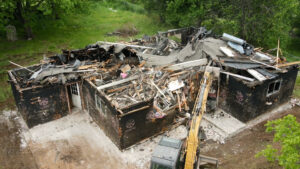
Whether you’re tearing down a structure yourself or working with a professional demolition company, safety should always be the number one priority—especially when it comes to electricity. Demolition work often involves exposure to electrical hazards that can be life-threatening if not handled properly. We take electrical safety extremely seriously on every job site, and we want to share some crucial precautions that every homeowner, builder, or contractor should know.

Tips For Dealing With Power & Electrical Lines During Demolition
01. Always Treat Downed Power Lines as Dangerous
If you come across a power line that’s fallen—no matter how harmless it looks—do not go near it. It could still be live and extremely dangerous. Keep a safe distance and call your local utility provider immediately. Cordon off the area until professionals can secure the site.
02. Power Lines and Vehicles: Don’t Exit
If a power line falls on your vehicle while driving or parked, stay inside. Do not attempt to get out unless absolutely necessary due to fire or other imminent danger. In most cases, remaining in the car and slowly driving away from the wire is the safest option.
03. Keep Water and Electricity Far Apart
Never use electrical tools or cords when standing in water or in a wet environment. If you’re working in a damp area, inspect all cords beforehand and use a ground-fault circuit interrupter (GFCI) to prevent accidental shocks or electrocution.
04. Be Cautious with Electrical Systems in Older Structures
Older homes may have outdated or deteriorating electrical systems. If you notice an outlet that feels warm or hot to the touch, unplug any devices and turn off the power to that circuit immediately. Heat at the outlet can indicate faulty wiring or an overloaded circuit, both of which are fire hazards. Always consult an electrician to inspect any questionable outlets or circuits before continuing demolition work.
05. Don’t Use Damaged Cords or Equipment
Only use cords and electrical tools that are in good working condition. Frayed wires, exposed conductors, or cracked casings should be replaced or repaired by a qualified technician before use. Never attempt electrical repairs unless you’re trained and certified to do so.
06. Use Extension Cords Safely
Extension cords are not a long-term solution and should never be overloaded. Avoid connecting multiple cords together and ensure you’re using cords rated for the correct power load and environmental conditions (indoor vs. outdoor use). Avoid placing cords in high-traffic areas or across driveways where they can be run over, damaged, or exposed to water.
07. Know When to Shut Off the Power
Before beginning interior demolition, shut off power to the area being worked on. If possible, disconnect individual circuits at the breaker panel. This extra step could prevent accidental contact with live wires and significantly reduce the risk of shock or fire.
Electrical Hazards Should Not Be Taken Lightly
Demolition work involves more than just knocking down walls—it requires planning, caution, and awareness, especially around electricity. At Wannco, we follow strict safety protocols on every job site to protect our crew, our clients, and the surrounding property. If you’re unsure about the safety of a demolition project—especially when electrical systems are involved—leave it to the pros.
Need safe, professional demolition work in North Texas?
Get in touch with Wannco Services today and let us help you clear the way—safely.